

“I’ll play it first and tell you what it is later.” — Miles Davis
Late June 2026 — Algae blooms. Strait of Hormuz. World Cup. Knicks in Five. SpaceX IPO. Earth’s first trillionaire. What comes next is anybody’s bet. Everyone is betting. The markets are open. The tables are live.
Speculation has become a social aesthetic—a style of being with the future. As Rick Rubin puts it, “We’re not playing to win, we’re playing to play.”
The new cool belongs to those most alive to the present. These cats live in a “Be Here Now” of curiosity and wonder, giddy on the upsides of buying the dip. Miles Davis whispers, “Do not fear mistakes. There are none.”
We are living in a world-as-casino, where unpredictability abounds. Surfeits and scams; strange bedfellows and surprising collabs; mashups of artificial and real—these are par for the course. When unicorn bet-tech Polymarket dropped its newest advertisement, culture watchers took note.
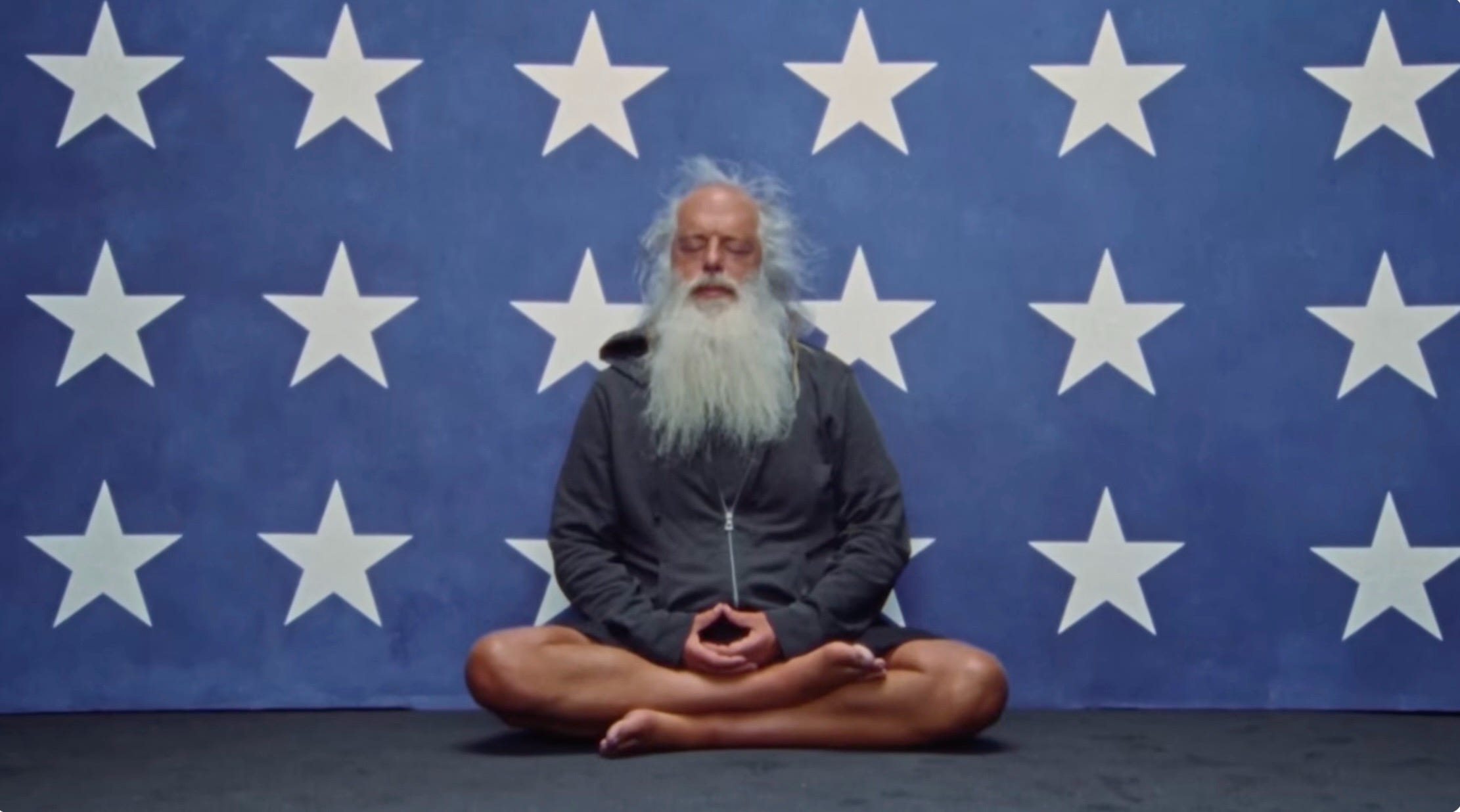
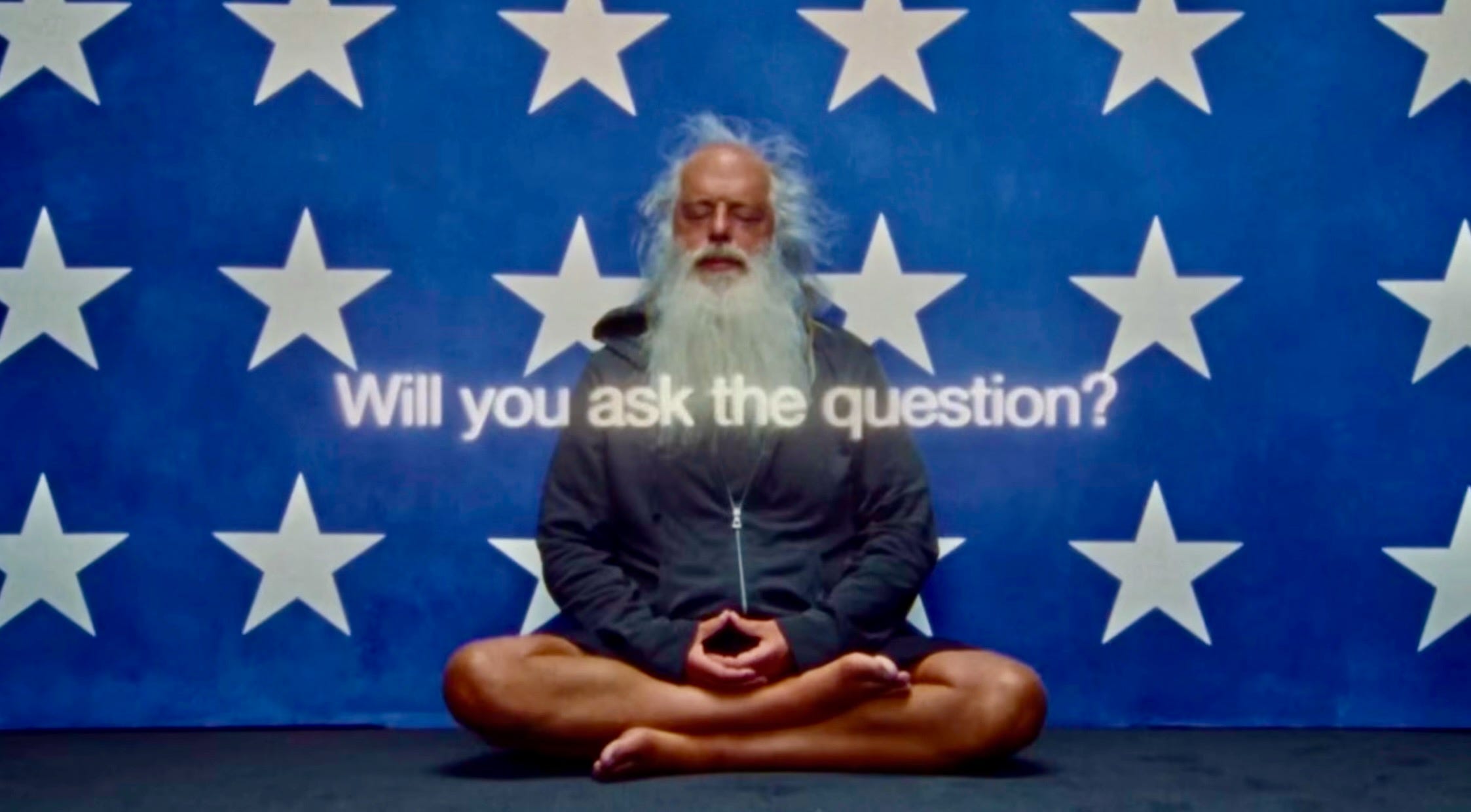
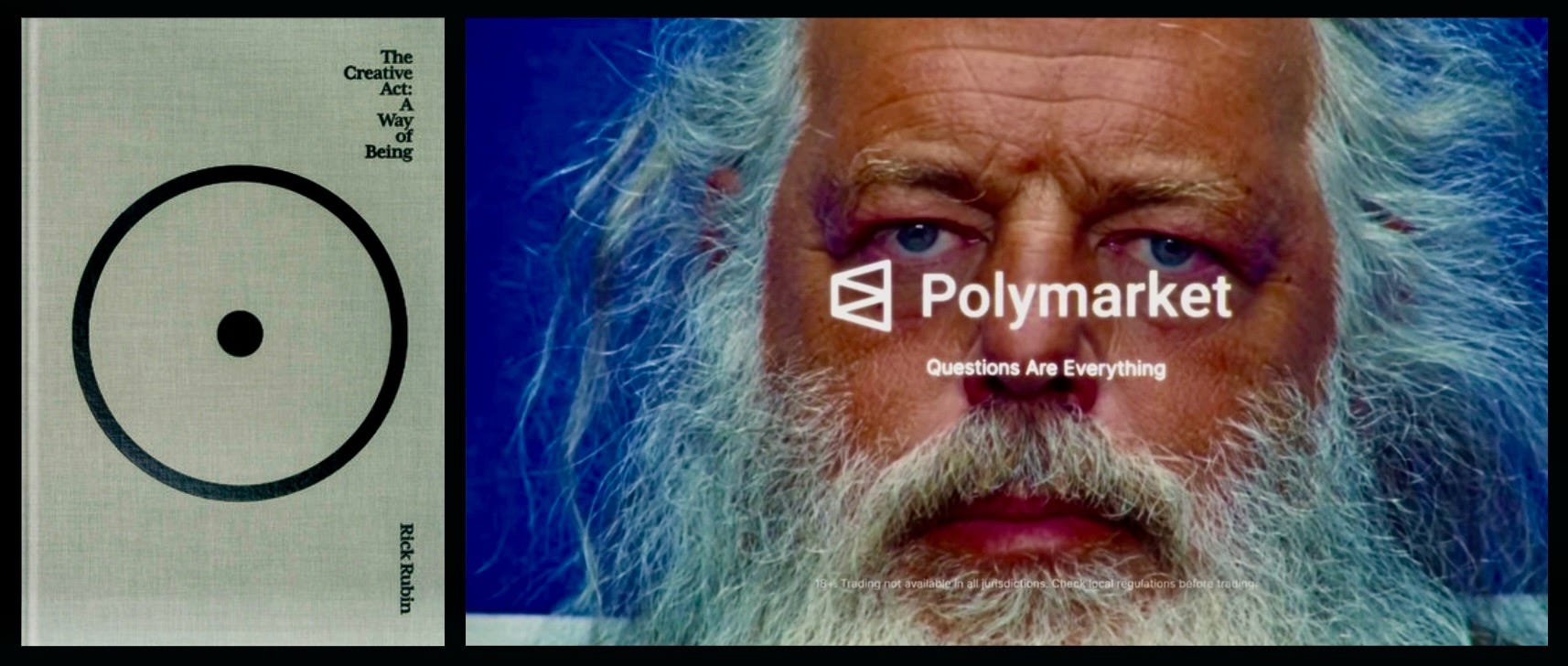
The darling of the “think-different” set—the barefoot, bearded, schlubby-awesome boddhisattva of the rock-and-roll-could-never-ever-hip-hop-like-this, the “there-is-no-spoon” of the genre-bending business minds—sits on the floor in front of a blue wall with white stars. Eyes closed, hands clasped in the trademark shape of Om, Rubin says: “If you could ask one question, what would you ask?”
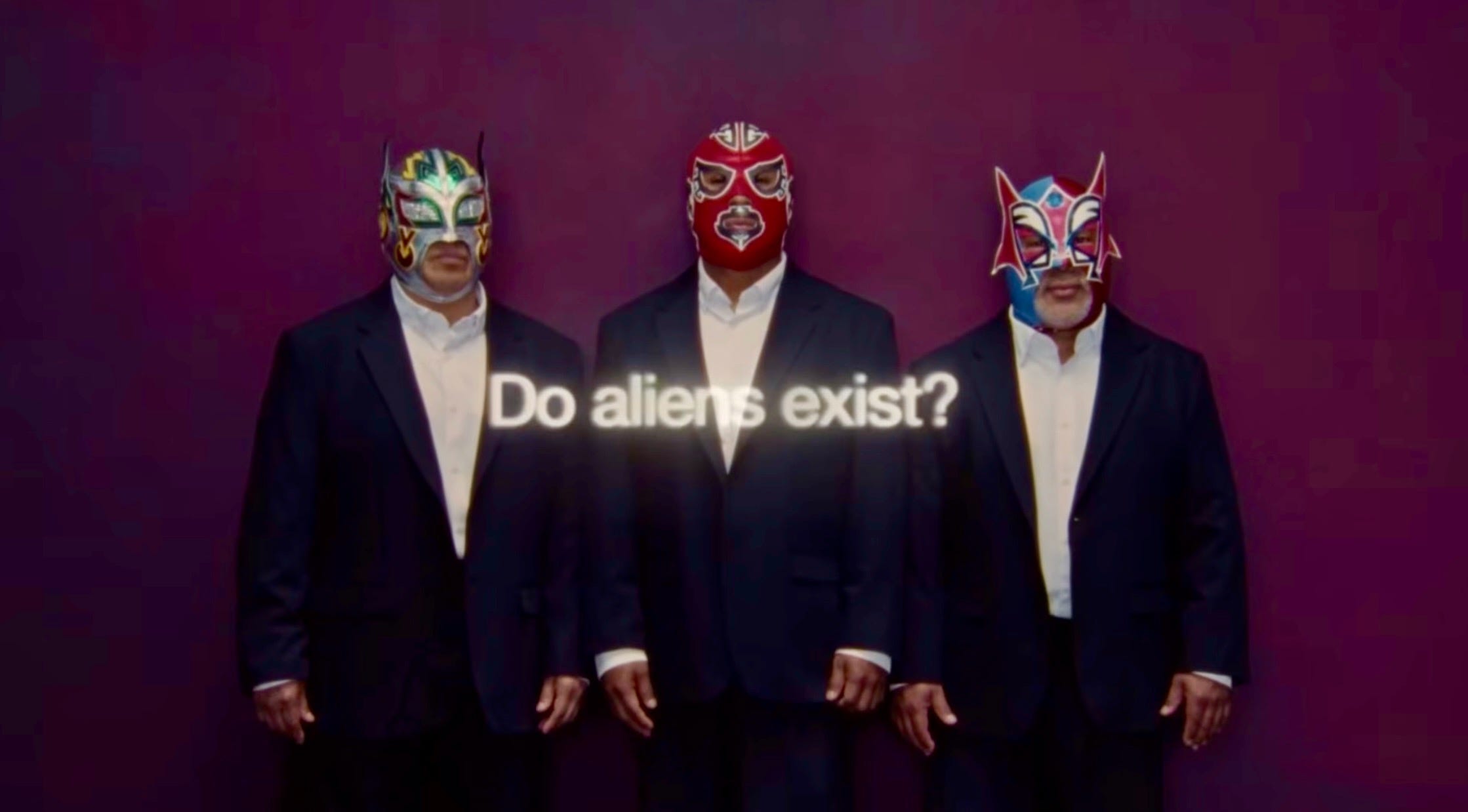
What follows is a series of uniformly formatted scenes. A figure (or identical figures) posed against a painted wall. A question fades in, then out. For example:
Can the US win it all?
Is it football or soccer?
Will borders matter in 100 years?
Can you predict the future?
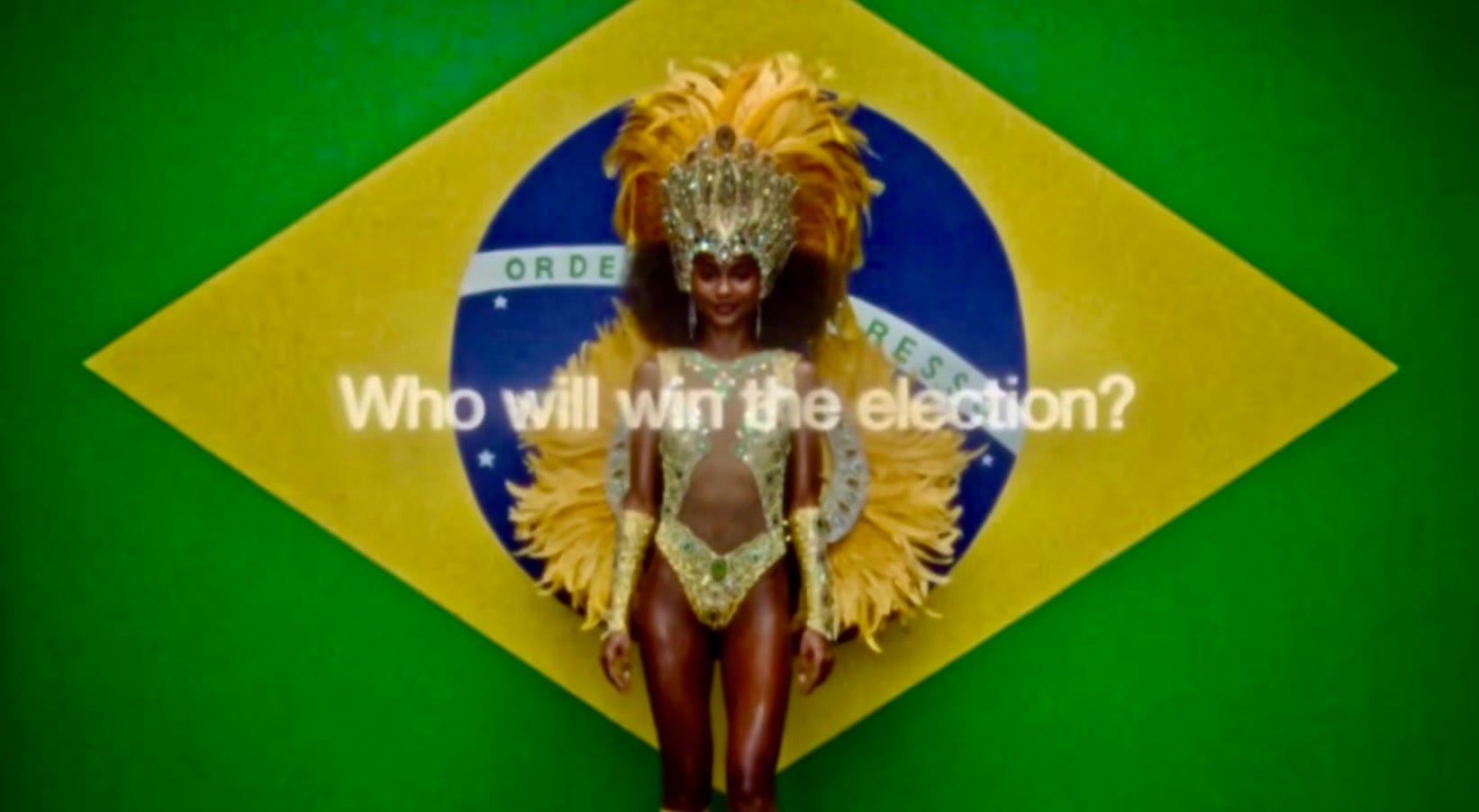
Who will win the election?
Will we be divided?
Will we be united?
Will one man define a nation?
Do you believe in miracles?
Will AI make us better?
Will you ask the question?
Will you find the answer?
Polymarket. Questions Are Everything.
This is the rat-a-tat-tat format of a PowerPoint presentation. Directed by Gabriel Moses—a self-taught British-Nigerian South London prodigy of cool—the style is smooth, rich, moody. The background music, Kanye West’s Runaway (featuring Pusha T.), feels newly charged. Structurally, it speaks the lingua franca of the corporate slideshow.
The figures stage cosmopolitanism: diversity-beautiful embodied in people from fifteen different countries, representational politics via painted backdrops of national flags. The “one damn slide after the other” format suggests coherence among parts belonging to a single whole—a world-as-cup.
“I don’t care if a dude is purple with green breath as long as he can swing.” — Miles Davis
Questions are not everything.
The word “question” is doing heavy lifting here. To question everything is to take up the subject position of the skeptic. The mantle is worn today by conspiracy theorists and critical thinkers alike.
Questions aren’t equivalent. In the land of inane questions, the half-sensible question becomes king. “Is it football or soccer?” and “Will borders matter in 100 years?” are very different. The stakes of the questions and the methods required to answer these questions aren’t the same—not even close. But juxtaposition without justification sends the mind racing to fill in the gaps. We cannot help it. Our mind is gestalt-driven. Association does work that would never survive systematic scrutiny.
“Anybody can play. The note is only 20 percent. The attitude of the motherfucker who plays it is 80 percent.” — Miles Davis
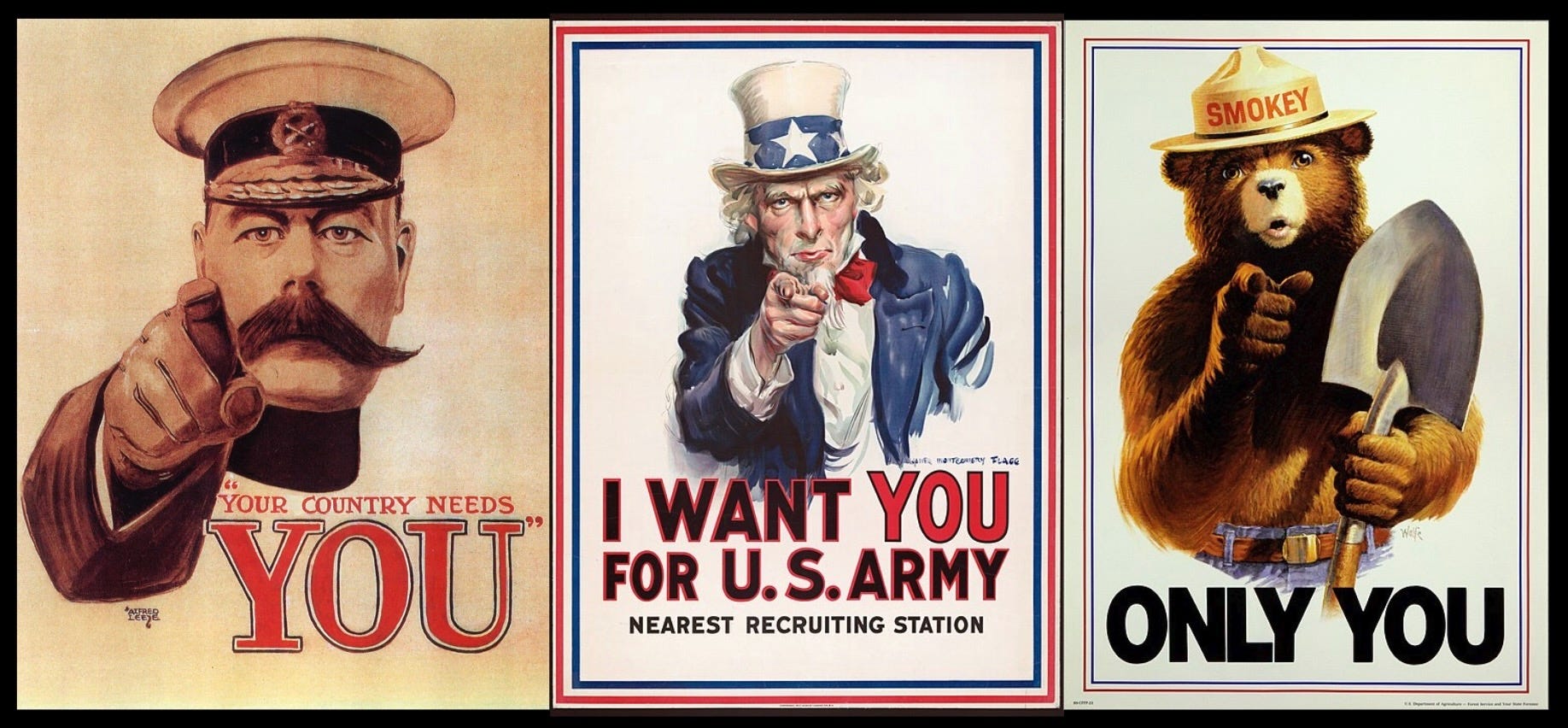
“You” is an old trick. It breaks right through that wall between audience and performers. All the world is staged.
Shakespeare uses the technique in As You Like It when Rosalind acknowledges what the audience already knows: she is a he (as was the convention in Elizabethan theater). In modernity, the device becomes familiar from twentieth-century propaganda posters, which implore the viewer to see themselves as fundamental and necessary to the project of the common good of the state.
But this you is a different kind of you. It isn’t you as the savvy audience member hip to the conditions of social constraint, or you as citizen of a republic. This is you, just asking questions. Except that, sitting in a yogic posture of interiority, these questions are coordinated into bets you can make right here and now from a powerful little device in your hand.
(Look at this, Gentle Reader. I can’t get this platform to handle image editing all that well, but there is a built-in tool embedding prediction markets into a post at the push of a button:
—well, you get the idea.)
The twist in this use of direct address is that it poses a question. It’s not the “ask not what your country can do for you, but what you can do for your country” kind of you. It’s the speculator version of you. And if you choose to answer the question, you do so in the form of a bet—the predictor version of you. These are social forecasters reading trends as they become legible through markets.
“If you know what you want to do and you do it, that’s the work of a craftsman. If you begin with a question and use it to guide an adventure of discovery, that’s the work of the artist.” — Rick Rubin
Between inner journey and outward expression, worlds become permeable. Commerce, sports, ethics, politics, art, love, religion—what’s the difference? In contemporary parlance we call this creativity—and creativity is fundamentally cool.
They shot it in a month. They got permissions cleared for the track in 24 hours. If you were born somewhere between the late eighties and early nineties, that soundtrack is mainlined nostalgia. You wouldn’t even know what this ad is about until the final moment when the brand is revealed.
Rubin gets the legacy spot: hero, eminence grise, vanguard at the forefront of shifting cultural forms and cash-money payouts. Game recognizes game? As @marinadgal put it, “Rick Rubin makes Polymarket morally acceptable and Kylie Jenner makes Meta glasses not cringe, all in the same week. And this is why great marketing runs the world.”
At the same time, The Wall Street Journal published an investigation into Polymarket’s deceptive advertising practices. The company has been paying influencers to post misleading images and videos of “wins.” These fake bets would have, in fact, cost users real cash money. In New York Magazine staff writer Matt Stieb’s analysis:
“Americans understand by now that what you see in an ad is not necessarily what you get when you buy the thing in the ad. Rarely does the burger taste as good as it looks on TV. But in pursuit of rapid growth during a period of ultra-industry-friendly federal regulation, prediction markets are exploiting the gap between the ad and the product in bold, perhaps legally shaky new ways.” — Matt Steib, Intelligencer, June 22, 2026
Two days ago, the National Association of Consumer Advocates filed a lawsuit against the company for its flagrantly deceptive advertisements. POLITICO has identified five hundred social media posts as undisclosed paid partnerships, including by Fox News contributor Riley Gaines. Given the company’s public reach, this slippage between storytelling and financial risk is consequential.
“But you’ve got to have style in whatever you do — writing, music, painting, fashion, boxing, anything.” ~ Miles Davis
Style carries cultural force, politics even. It lets things borrow from one another, crossing gaps through composition, recombination, and invention, and traveling into new arenas of social play. Style coordinates practices, allowing them to migrate from one domain to another. In this case, the artist’s disposition is being repackaged as the speculator’s disposition, to become a style of Speculator Cool.
We tend to imagine speculation as belonging to finance, but speculation names a broader cultural posture. It is how one inhabits uncertainty. Traders speculate. Artists speculate. Designers speculate. Gamblers speculate. Entrepreneurs speculate. Even children speculate. What has changed is that these practices increasingly borrow each other’s styles in the present.
“My future starts when I wake up every morning. Every day I find something creative to do with my life.” — Miles Davis
Therein lies the rub with creativity: to what end? Polyphonic, synaesthetic beginner’s mind—open ways of being and becoming—turns everything into a question and a craft, giving access to the aesthetic flows and innovations that make poetic world-building possible.
Algae blooms. Strait of Hormuz. World Cup. Knicks in Five. SpaceX IPO. Earth’s first trillionaire. Maybe questions are everything. Maybe. Probably not. The posture of asking them is neither here nor there.
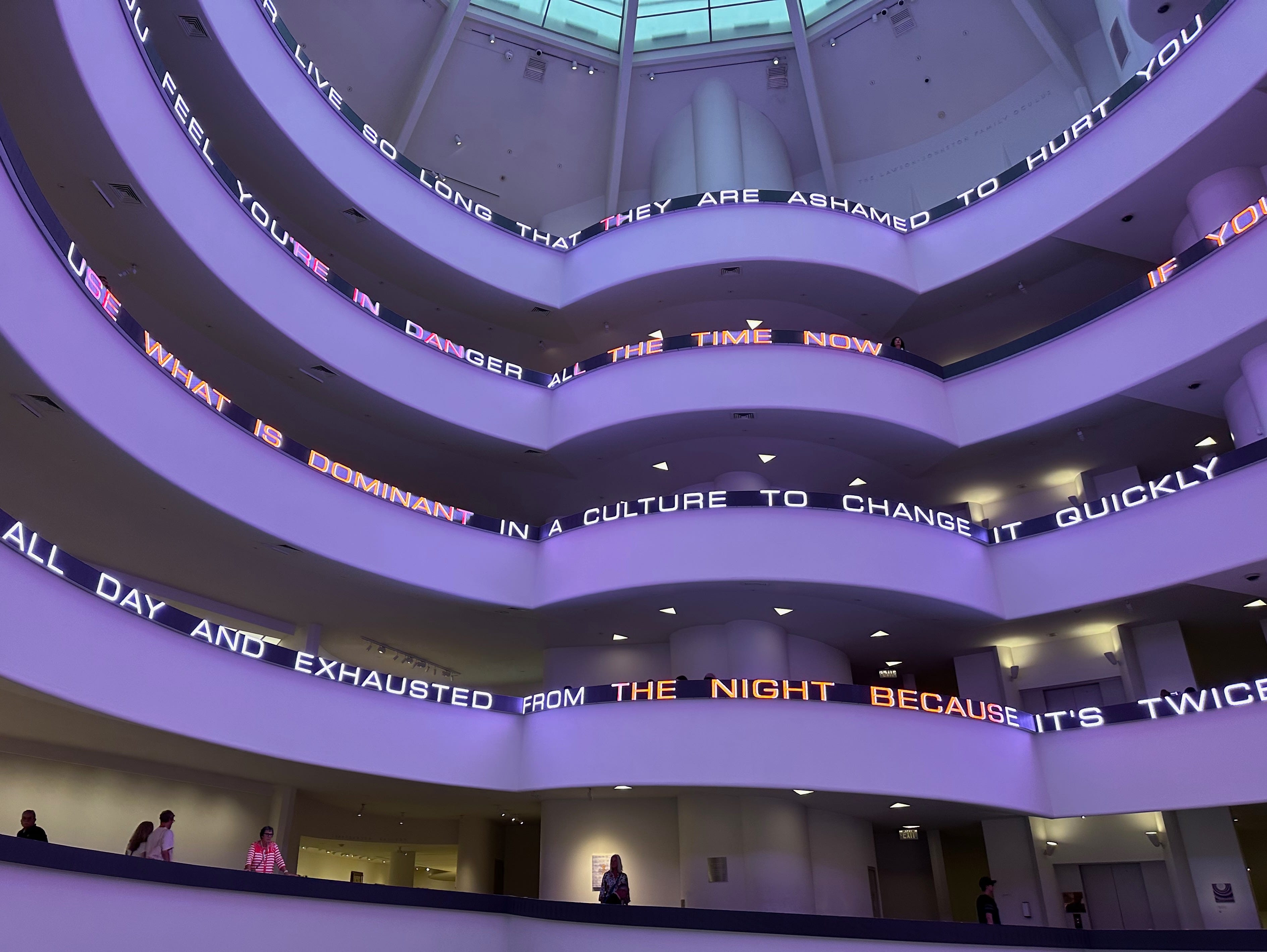
This is the problem of making sense of the art and the artist. A way of being can produce beautiful things, but it does not necessarily bear on the character of the producer. There is an art in noticing how to make jazz and how to culture jam. When Miles Davis was twenty-two, he received an invitation to join the Duke Ellington Orchestra—at the time the most prestigious jazz group in the world. He turned the offer down to complete The Birth of The Cool. Sometimes, the realest question is: when you use what is dominant in a culture to change it quickly, how do you keep it from changing you?
Thoughtfulness matters in everything - perhaps especially so in the questions we choose to occupy ourselves with. Brilliant piece.