

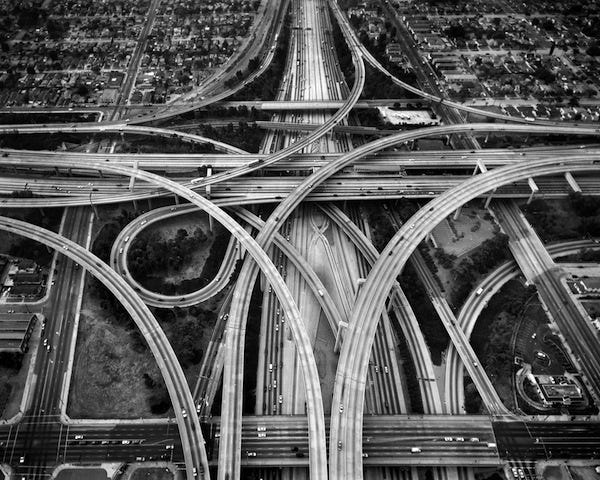
The car is a vehicle for agency, an instrument for reaching opportunities elsewhere, where life might be self-determined and free.
The American repertoire is saturated with stories about transformation on the open road. In Thelma & Louise, the protagonists get into a turquoise 1966 Thunderbird convertible and do their best, together, to outrun the terms of patriarchy that constrain their lives. They can’t go home again. Maybe that’s the point. In Zen and the Art of Motorcycle Maintenance, the narrator takes a fast machine on a grand journey, tinkering towards enlightenment along the way. Tracy Chapman’s ballad, “Fast Car,” treats velocity as hope, a wager that mobility might overcome the gravity of shared circumstance.
You got a fast car
Is it fast enough so you can fly away?
You gotta make a decision
Leave tonight or live and die this way
— Tracy Chapman
The car is a theory of freedom.
And yet, the ordinary experience of car life cuts another way: long commutes, exhaust, traffic jams, accidents, and debt. The road fills with people who all want the same thing—to get from here to there—thus reliably vexing one another by getting in the way.
Traffic is other people.
Freedom has serious externalities. Motor vehicle accidents aren’t only a leading cause of death, they are the leading cause of death for teenagers, young people, and pregnant women. The largest category of non-housing consumer debt is auto loans, surpassing both credit cards and student debt. Roughly 28% of U.S. greenhouse gas emissions come from transportation, making it the single largest share.
Less than 5% of Americans commute by public transit. The majority of those who do live in just a handful of major metropolitan regions. There are other visions on offer: high-speed rail, mass transit, pedestrian villages, fifteen-minute cities, eVTOLs, and cablebuses. People want different choreographies of movement, denser patterns of encounter. Yet, over 90% of U.S. households own a car. More than 20% have two or more.
There is no getting around cars.
“So, like earlier generations of English intellectuals who taught themselves Italian in order to read Dante in the original, I learned to drive in order to read Los Angeles in the original.”
— Reyner Banham, Los Angeles: The Architecture of Four Ecologies (1971).
Cars are near-perfect objects for systems thinking. For the individual, they offer mobility on one’s own terms. A car of one’s own is a small, durable freedom. But when that choice is made at scale, it reorganizes the landscape in ways that produce congestion, isolation, and sprawl.
The car is a double-bind: they grant freedom that scales to constraint.
At the level of architecture, the effects are concrete. The average two-car garage adds more than 400 square feet to a home’s footprint. To keep proportions sensible, houses expand into inflated domestic volumes characteristic of suburban sprawl. Zoning laws imposing parking minimums reinforce the pattern while raising construction costs, thus disincentivizing density and mixed-use development.
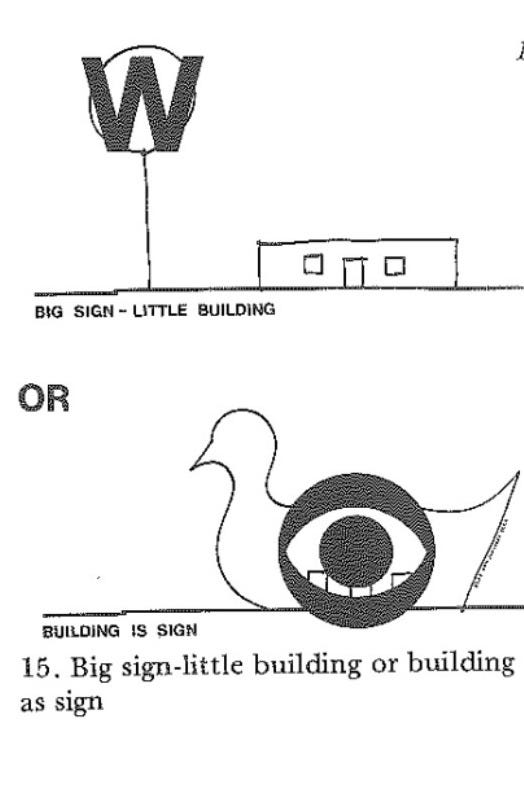
Signage shifts. Oversized lettering, setback buildings, and big box stores are designed to be read by motorists traveling at speed. They have replaced the glass storefronts and detailed displays that once seduced the pedestrian slowly walking by.
Cars beget decentralization, decentralization begets cars.
Transportation shapes cultural geography. The built environment is shaped by choices that appear, at first glance, to have nothing to do with architecture at all.
We can also read the car through supply chains and political economies. Nearly half of U.S. oil consumption is transport-related, with gasoline for everyday vehicles (cars, trucks, and SUVs) dominating this category. The auto industry is the third-largest consumer of steel. So when tariff rates on raw steel are set to 50%, or Nippon Steel’s acquisition of U.S. Steel is approved, or the White House ballroom project sources Luxembourg rather than American steel, the lines of provisioning automobility are being adjusted.
Rubber tells a similar story. The U.S. tire industry is the largest consumer of natural rubber, most of it sourced from plantations in Southeast Asia. Experimental alternatives are under development, such as guayule, a shrub indigenous to parts of Texas and Mexico. But scaling them requires new processing infrastructure, major investment, and new alignments between agriculture, industry, and the state.
And then there is computing. Between entertainment systems, sensors, diagnostic and biometric data, and perceptual systems, a vehicle runs on about 100 million lines of code and generate terabytes of data daily. The ideal object of a Fordist economy—mass-produced, mechanical, standardized—has transformed into an ideal object for the information age: compute that moves.
Looking ahead, the transition to electric vehicles extends these pressures. The auto industry will play a key role in reorganizing the geopolitics of extraction as rare earth minerals and lithium for batteries become increasingly valuable worldwide. Welcome to the green fuel era. The mobility question is, what kinds of lives can intelligent-industrial systems support?
I think every manufacturer has three choices, it’s pretty simple. They’re either going to develop their own autonomy platforms, they’re going to buy an autonomy platform, or they’re going to make this not a priority and they’re going to lose market share. But the last one, you have to accept that in not too much time, if you don’t prioritize this, you will lose market share. It’d be like trying to sell a house without electricity, it’s going to become so fundamental to the functioning of the vehicle.
— RJ Scaringe, Interview with Ben Thompson, Stratechery
Category transformations are difficult to see in advance. They arrive unevenly, through partial innovations and unstable forms. Some of the most important inventions turn out to be intermediate, useful precisely because they do not last.
Elsewhere, I’ve written about these “lungfish of organizational evolution, awkward pioneers stepping boldly across the mud between epochs,” whose “very success ensures their disappearance.” The early automobile stepped awkwardly away from animal to machine power as a horseless carriage. Named by subtraction, it was defined by what it was not. It is entirely possible that the self-driving car is a horseless carriage—and we are the horse!
What comes next doesn’t yet have a stable name. But pressures on production systems and cultural styles are visible. When the terms of movement shift, other things shift with them: built environments, social arrangements, ways of being a self among others. If we are going to change how we get from here to there, what else might be open for experimentation? What is possible from here? Can self-driving cars be part of transitions to forms we have not yet seen?
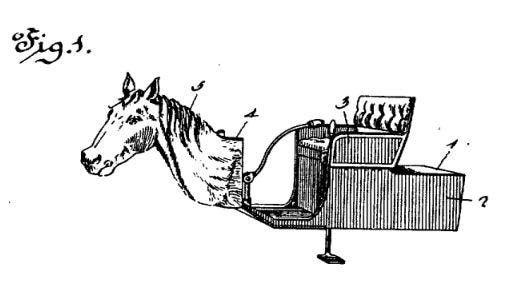
A car without a driver is a carriage without a horse. Autonomous vehicles turn everyone back into a passenger—which is to say, a different kind of subject.
In one sense, the promise of self-driving cars is rather conservative. Transportation remains privatized and organized around individualized trips in sealed spaces. People can travel great distances, moving without mass encounters. Public life remains optional, and therefore avoidable. Freedom from sociality holds.
In another sense, something opens. Interior arrangements are amplified. Work, leisure, intimacy, boredom, entertainment, even sleep become possible for everyone in the moving frame. Perhaps it’s time to revisit the culture of carriage societies, not nostalgically but analytically. Will the car become a programmable room of one’s own?
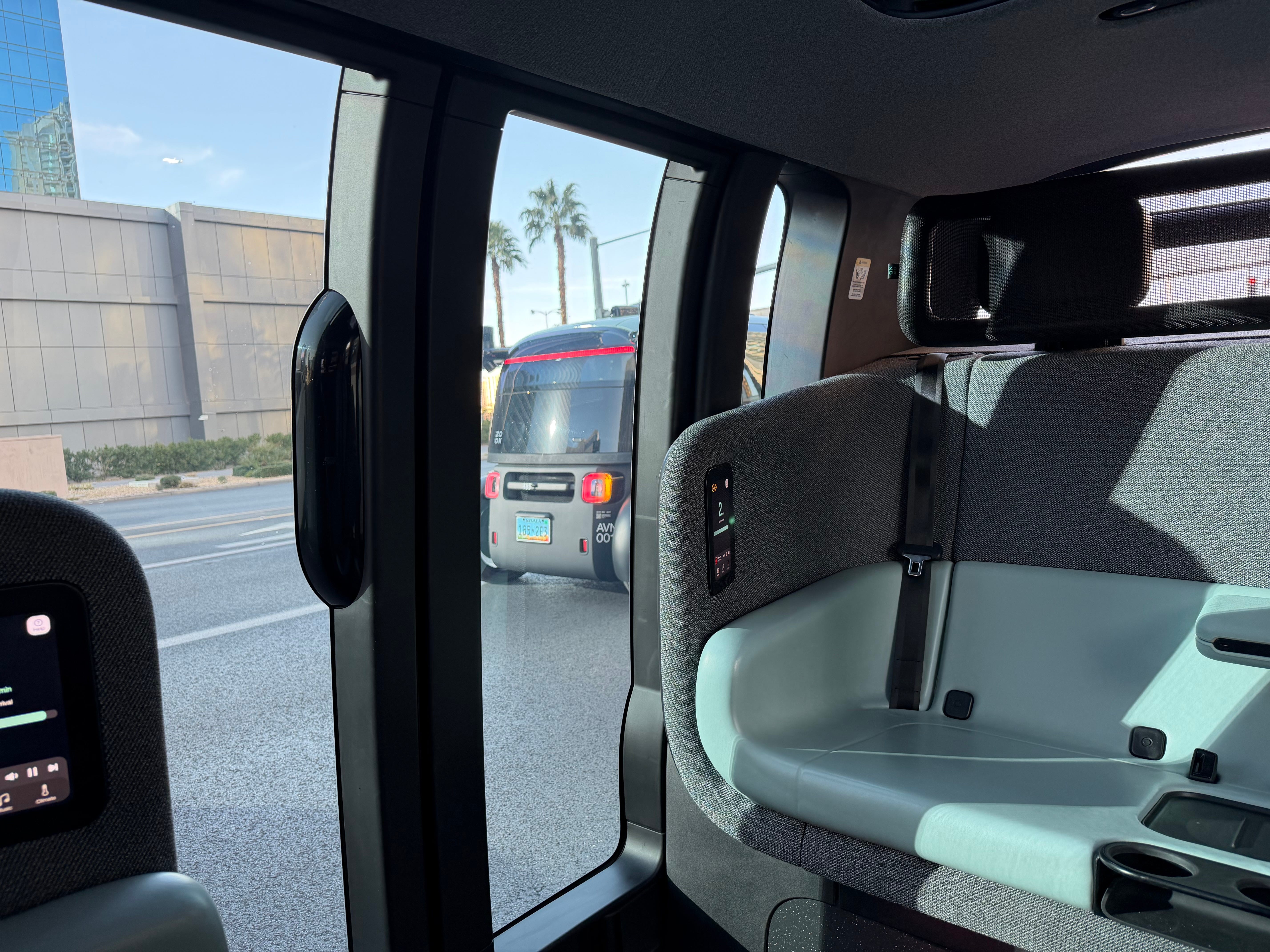
For over a century, American automobility has organized subjectivity around the driver: the one who steers and chooses, escaping or assuming responsibility. Agency is directed control. Mobility is self-expression. The central drama is departure and arrival, or identity remade elsewhere. But the driver is receding and “riding in a fast self-driving car” doesn’t quite carry the charge.
When categories change, value transformations are underway. Technical transitions are also cultural ones, which is why storytelling about transportation futures matters so much.
So tell me a roadtrip story about what kind of passengers we could be.
Tell me a version of freedom that is encounter and coordination, not escape. Read the contradictions, pleasures, and travails of passage through a world structured by systems. Show me how to see supply chains, platforms, ecologies, and the multitudes of lives moving alongside one another. Give me dramas of energy and materials, infrastructure and architecture, of psychic transformation under new conditions of movement.
Tell me how to move with the freedom to help provision the worlds we pass through.
“I’m not sure he’s wrong about automobiles,” he said. “With all their speed forward they may be a step backward in civilization - that is, in spiritual civilization. It may be that they will not add to the beauty of the world, nor to the life of men’s souls.”
― Booth Tarkington, The Magnificent Ambersons
Amazing. I think we’re already starting to see car qua programmable room of one’s own—it’s the environment of so many TikTok videos!
Fascinating
great stuff
this link doesn’t wanna open tho
what were carriage societies??