

The last time the Knicks won the Championship was in 1973.
New York was a different city then. And its political culture espoused a different theory of what cities are for. To appreciate what a championship Knicks means, it helps to remember just how much was breaking open. In 1973, confidence in the postwar order was fraying, as the institutions organizing American life for a generation shifted all at once:
The U.S. military pulled out of Vietnam.
The Bretton Woods system of fixed exchange rates collapsed, marking a monumental shift in the post-war monetary order.
The OPEC embargo against countries that supported Israel in the Yom Kippur War created the conditions for Iran to quadruple the global price of oil. Thus began a stock market crash and recession that ultimately caused the S&P 500 to lose half its value, and set off record-high unemployment rates at a moment of soaring inflation.
The landmark victory for second-wave feminism, Roe v. Wade, was also decided, transforming women’s capacity for reproductive choice for the next half-century.
The American Presidency was in crisis. Nixon’s popularity plummeted as revelation upon revelation cast serious doubt on his repeated denials of culpability and cover-ups in the Watergate Scandal. In his final address to the American people, he would insist that:
“People have got to know whether or not their President is a crook. Well, I’m not a crook. I’ve earned everything I’ve got.”
— Richard Nixon, 1973, Orlando Florida.
In 1973, New York City Comptroller Abraham Beame was running for mayor. The municipal bookkeeper would prevail, only to inherit a city entering severe fiscal crisis.
New York City was—and still is—the most populous city in the United States. It boasted robust working-class cultures, strong unions (private and public), free museums, public media, libraries, theatres, parks and playgrounds, a backbone of neighborhood community and healthcare centers, and education resources ranging from preschool programs to research universities. Crucially, it also had flat-rate public transportation. If you could make it here, you could get almost anywhere.
It was also a place rocked by the social movements of the 1960s and the broader national reconfigurations in geopolitics, monetary systems, energy regimes, gender relations, and political institutions. On the ground, this manifested in demographic shifts in the urban core, brought about by deindustrialization and suburbanization. As manufacturing jobs moved out, the city itself became the largest employer, by far. One in eight New Yorkers relied on social services.
In 1973, the West Side Highway buckled under the weight of a truck and collapsed.
Historian Kim Phillips-Fein catches the light of the confident postwar city teetering on the brink of bankruptcy:
“Everyone knew that things might collapse. And though no one was willing to talk too openly about the possibility of failure, the problems of the city were common knowledge, unmistakable and impossible to hide. There was perhaps something appealing about this disrepair, a certain freedom in the unkempt metropolis. Yet there was also real danger. And there was no rescue in sight, nothing that would come in to close the holes, to fix what had been broken, to save the people who lived in the city that was slowly falling apart.” (Phillips-Fein, Fear City)
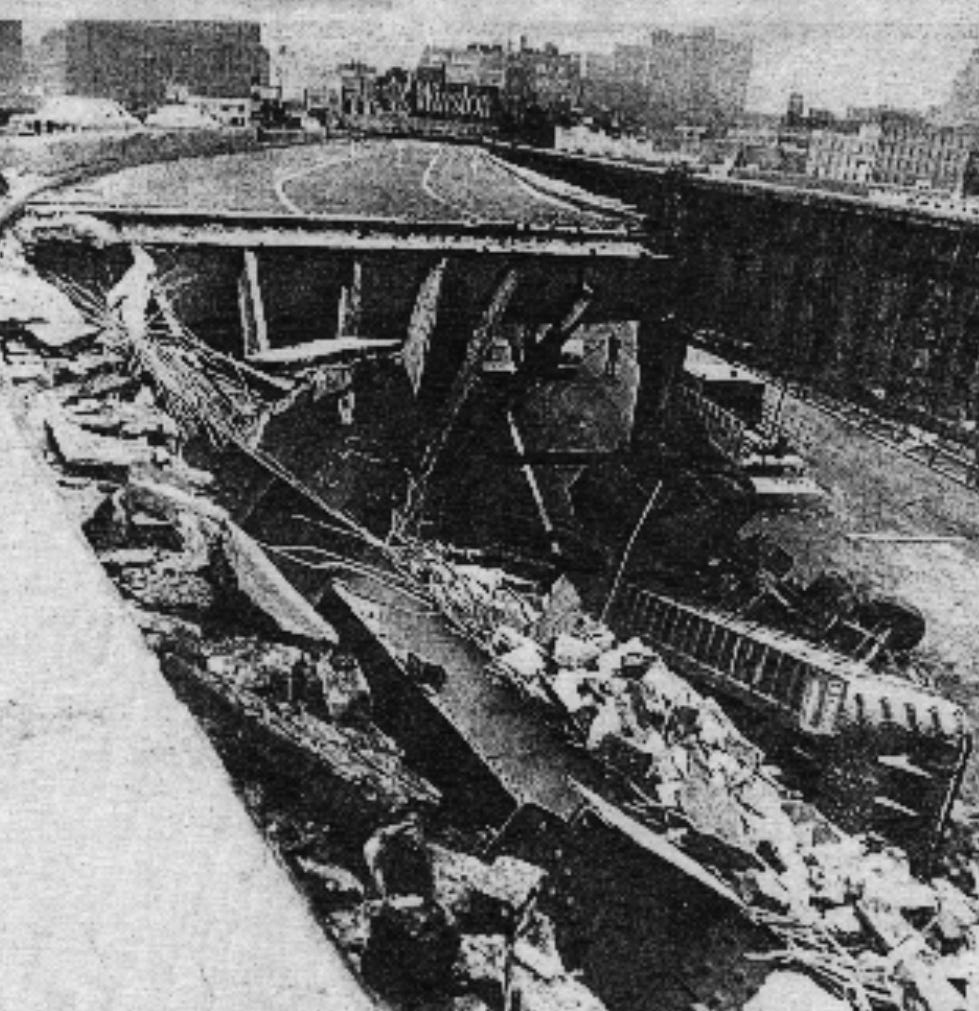
1973 New York City was raw, vibrant, and dense with social action. In the depressive conditions, art worlds rhizomatically grew, assembling iconic styles and inventive cultural experiments in music, film, performance, and graffiti. The bustling cosmopolitan street life boomed amidst explorations of collapse and urban decay, leaving behind a rich semiotics that has continued to shape movements in global culture to the present.
This isn’t a romantic position. The point is not that decline is beautiful, it’s that dense worlds of collective life produce extraordinary cultural experimentation. It is an observation about the richness of aesthetic capacities, visions for public feeling, and a sensibility for belonging to the city that shaped the terroir of New York City life even as the political cultures of austerity crept in.
That said, the restructuring of real estate investments and circumscribed municipal services contoured mobilities and belonging within the city for decades to come. Surely all of this is in the past. What does 1973 have to do with 2026? And what does any of this have to do with basketball?
National Audiences
This summer, the United States will celebrate its 250th anniversary. If there is a moment for civic rituals that allow us to reflect on who we are as a people, and to share that vision of ourselves with the world, this would be a good one.
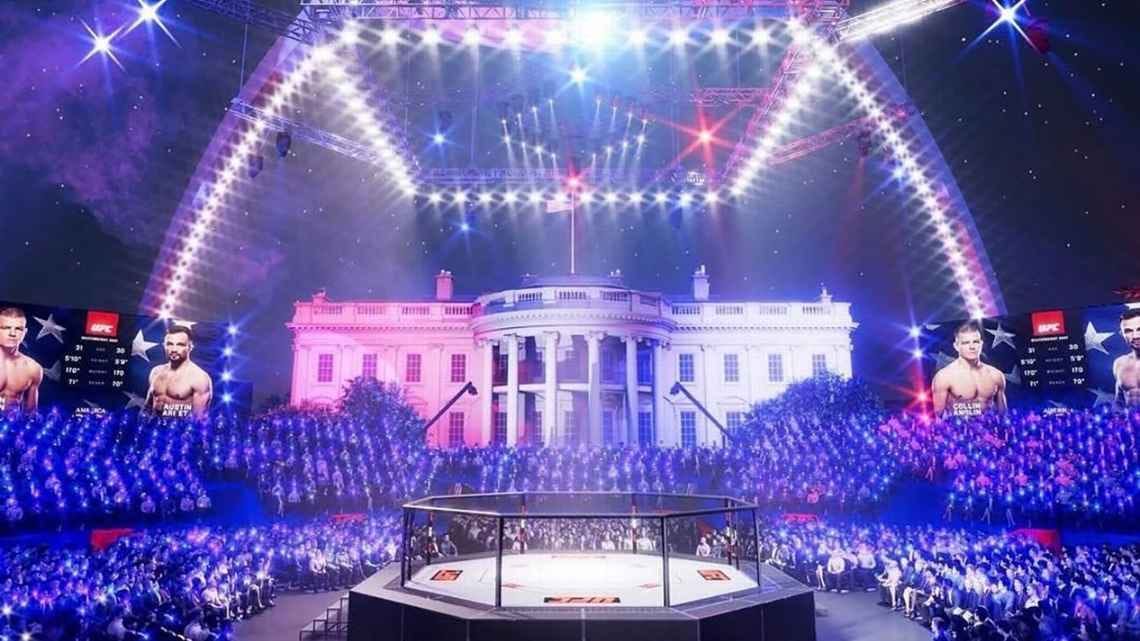
Donald Trump is president. And the celebration will take place on the White House lawn, where a massive octagon stage-arena under a “patriotic arch” has been erected. On June 14th (Trump’s 80th birthday), it will serve as the setting for UFC250, a cage-match tournament that will be broadcast and streamed worldwide. The live audience will be full of U.S. soldiers who all meet a waist-to-height ratio of .55 or less.
The cultural observer might be forgiven for drawing analogies between this moment and 1973. After all, the country—and therefore the world—are in the midst of institutional upheavals and instabilities of our own making:
U.S. tariffs are actively exacerbating an affordability crisis by driving up costs across core sectors of the economy, including housing, automobiles, everyday consumer goods, and business operating costs.
In the wake of US attacks on the Iranian regime, the Strait of Hormuz is closed, thus disrupting global supplies of oil, fertilizer, and most everything else.
The slashing of government services and regulations is reducing state capacity and fraying the social safety net required for crisis response.
Relations between the U.S. and its allies are straining, as well as the perception that the country constitutes a reliable and trustworthy international actor.
Artificial intelligence is restructuring the terms of investments in knowledge and manufacturing economies, as well as core definitions of occupation, agency, intelligence, and work.
President Trump has mounted an unprecedented effort to subjugate the Federal Reserve’s traditional independence in order to control interest rates and central bank leadership.
…and so on.
The Versaillification of the White House is a world-building strategy that pulls from aesthetic vocabularies to reconfigure power arrangements. As the historian of media, culture, and communication Chandra Mukerji teaches, gardens can be sites of territorial ambition, where whole cosmic orders of absolute power become dramatized and naturalized through landscaped arrangements and media forms.
In this case, attempts to secure the posture of a unitary executive theory are made manifest through residential renovations that bring various arenas for the conduct of power together. Whether by gilded ballroom or broadcast “brawlroom” (credit to Robert Pondiscio for such a clever coinage), the coin of the realm is a politics of courtiers. Securitized gardens and golden palaces backed by media power and military masculinity are more than narcissistic entertainments designed “to keep a drowsy Emperor awake” (Yeats, Sailing to Byzantium). They are politically significant culture games designed to broker power through the formation of national audiences.
The drama of the contest played out on the lawn stands in for a promise of American Greatness, staged and delivered in clearly observable wins through superior cunning and force. “We The People” are bound through the representation of the solo fighter engaged in a winner-take-all bout to claim the title of uncontested world champion. The political achievement is not governance but audience formation. Millions of people who will never meet one another are assembled through spectatorship of the same contest. They become a national audience. Their relationship to one another is mediated through a champion who stands in for them.
Which brings us back to New York City politics, and by extension basketball…
President to City
In 1973, the Department of Justice sued New York City real estate developers Fred and Donald Trump for racial bias. It was in this moment that a young Donald secured representation from the infamous lawyer and political fixer Roy Cohn. Cohn’s advice to the Trumps:
“Just deny everything and fight.”
— Roy Cohn
This style of dealing in staged contests, hyped-up quests, matches, showdowns, pageants, and competitions comprises a throughline in Donald Trump’s path to power. These aesthetics came to maturation in that crucible of social action that was 1970s New York—and Zohran Mamdani knows it.
In 2025, when the thirty-four-year-old ran for mayor under the mantle of Democratic Socialism, he was speaking to a generation that had come of age after the Global Financial Crisis, Occupy Wall Street, and the pandemic. Many had spent their entire lives watching horizons of public possibility contract. Government was increasingly understood not as a vehicle for collective action but as an institution permanently incapable of delivering on ambitious promises. Free buses, universal childcare, public groceries, and expanded housing sounded radical, not because cities had never done such things, but because many people could no longer remember a city that did.
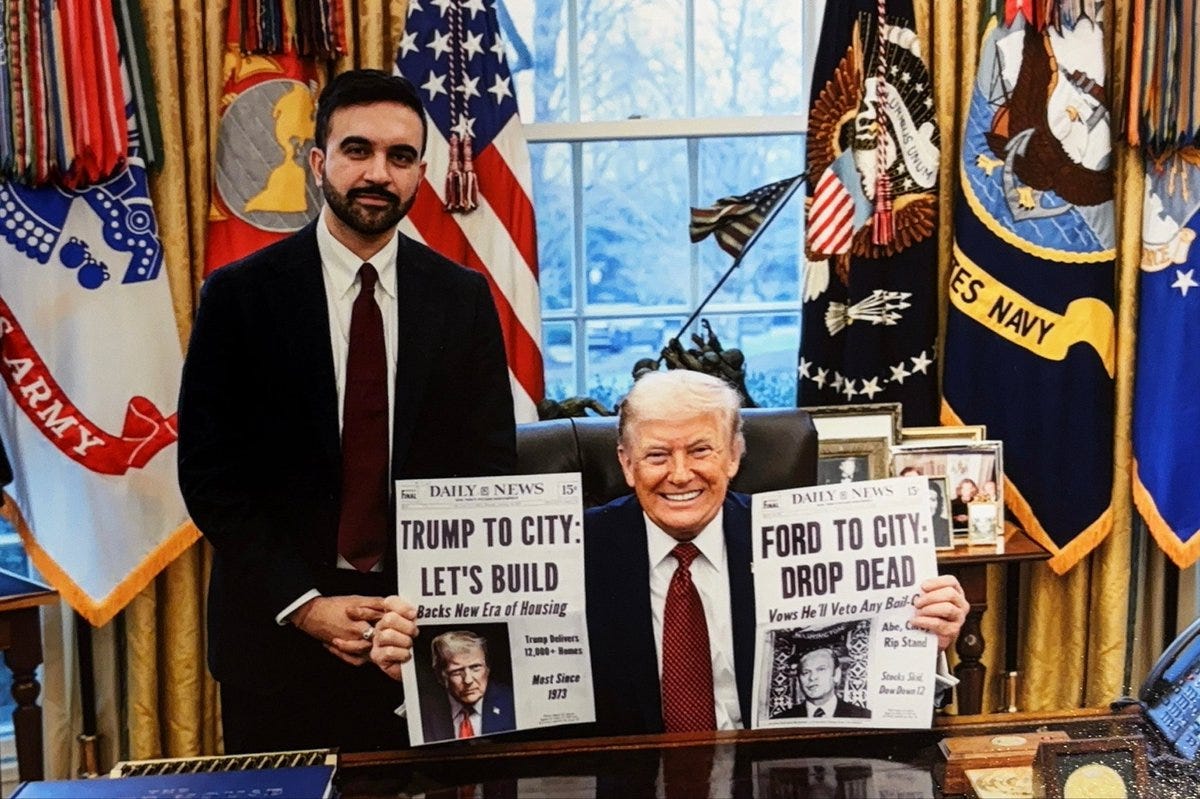
Gerald Ford inherited the presidency from Nixon just as New York’s fiscal crisis reached its peak. The emblematic city of pluralist abundance had historically benefited from receiving the lion’s share of New Deal aid, but the political tides were turning. When the city sought federal relief, Ford seized the opportunity to make it an example for the American people by loudly declaring that its day of budgetary reckoning had come. As the headlines of the Daily News put it: “FORD TO CITY: DROP DEAD.”
Analyzing the moment, Phillips-Fein writes:
“It provided a spectacular repudiation of the Great Society, the War on Poverty, even the New Deal. But for ordinary people, the fiscal crisis meant something different: it marked a change in what it meant to be a New Yorker and a citizen. We are still living with the consequences of this transformation today.”
— Phillips-Fein, Fear City
But great politicians are great rhetoricians. They understand the semiotic possibilities in the cultural matrix. They know how to say things in rooms. And the pleasure of being a student of history is in knowing that things can be otherwise, for good or ill. The ball of political possibility is always in play.
So when Mamdani arrived to the White House to meet President Trump, he brought props. Drawing from the archive, he brought an artifact that recognized Trump’s youth as their common ground. The gesture of the gift draws from the same playbook that has led so many other officials and leaders to make obsequious gestures to the Commander-in-Chief. But Mamdani also brought another artifact, one that improvised toward a novel outcome by making a yes-and bid to change the frame. In an age when we are constantly told that no one reads the paper and all that Trump will see comes from Fox News, the young mayor brought his older counterpart a Daily News headline reading:
“TRUMP TO CITY: LET’S BUILD.”
-Zohran Mamdani
Framed another way, two men in an arena don’t have to engage in winner-take-all competitions. A politics for the city doesn’t have to be abandonment, it can also be construction. Whether or not Trump accepts the invitation, a story was told about leadership as the capacity to build with others rather than merely defeat them.
Civic Fandoms
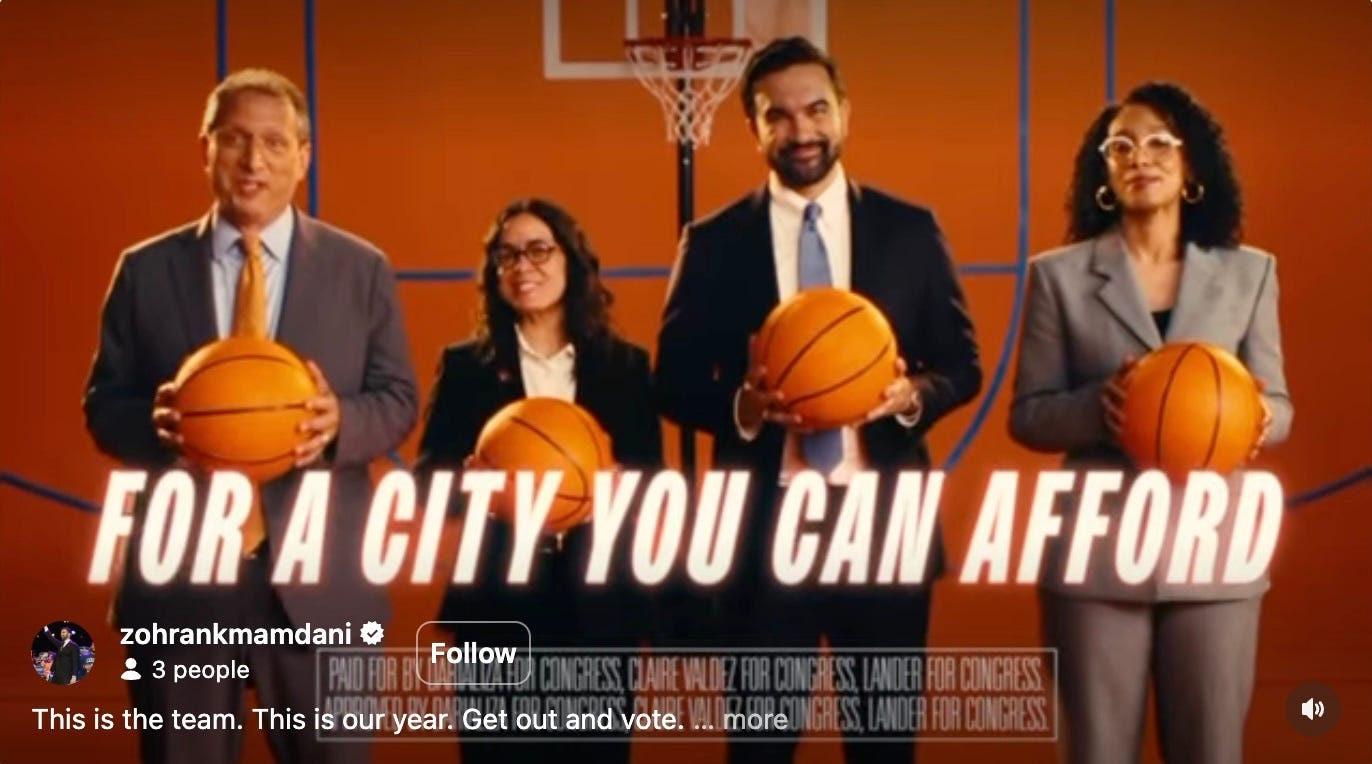
Championship runs are unusual civic events. In animating pride of place, they make a metropolis briefly visible to itself.
Basketball is a team sport. Like a UFC bout on the White House lawn, it stages a contest that allows for victory, defeat, and moments of individual brilliance. But the metaphorical possibilities are different. The cage match draws upon tropes of one-on-one direct exchange, whether through dialogue, debate, or domination. These are aspects of a democratic political culture. Basketball is won through coordination.
Millions of people who will never meet discover that they belong to the same story. In recognizing one another as participants in a shared drama, the city perceives itself. For a moment, the city appears as a collective actor. Individual experiences—the crowded bar, the stranger’s high-five, the subway ride home—collapse into a simple feeling: “I love this place.” Something bigger than an audience flickers into view: a public.
The contrast between the White House octagon and Madison Square Garden feels politically suggestive because each is a case of culture war theater. Two New Yorkers bearing traces of the same cultural terroir are playing with the semiotics of power and place. Audiences are assembling through spectatorship, watching the same event. In one case, the figure of the champion stands in for them. In the other, publics emerge through shared capacities, obligations, institutions, and forms of belonging that make a city possible. Sport is a cultural resource for rehearsing competing visions of collective life.
Will the Knicks win? Will Trump attend a game? Will the midterms ratify or reject the current political order? Who knows.
The point of the contest isn’t really about who wins in the arena. Knicks Fever poses the question: can the city still teach its inhabitants to experience collective life as something real, ordinary, and worth believing in? Will people remember that victory is achieved through collective intelligence, not singular force? Will they recognize themselves as part of the same public, take up the ball, and pass it?
Worries of personal finances, outside pressures against the other, the promise of meaning and employment fading, and the world has become bigger but more opaque.
Stability and familiarity start to erode, we remember we are players in the world, the world is alive but doesn’t feel friendly. We put up walls.
But we found the cisterns inside were all pumping from the same well. Walls we could not overcome on our own. The wave of enthusiasm cresting, breaching.
A sports team is alive in the same way a city is alive. We call it momentum or energy but it’s the collective and cyclical and escalating choice to continue believing.
Brilliant