Once upon a time, it stretched across two miles of beach and held three massive amusement parks. For New Yorkers, it was perfectly positioned — just far enough away to feel like a vacation and just near enough to be accessible to working people with a day off and a little pocket money.
Coney Island, baby.
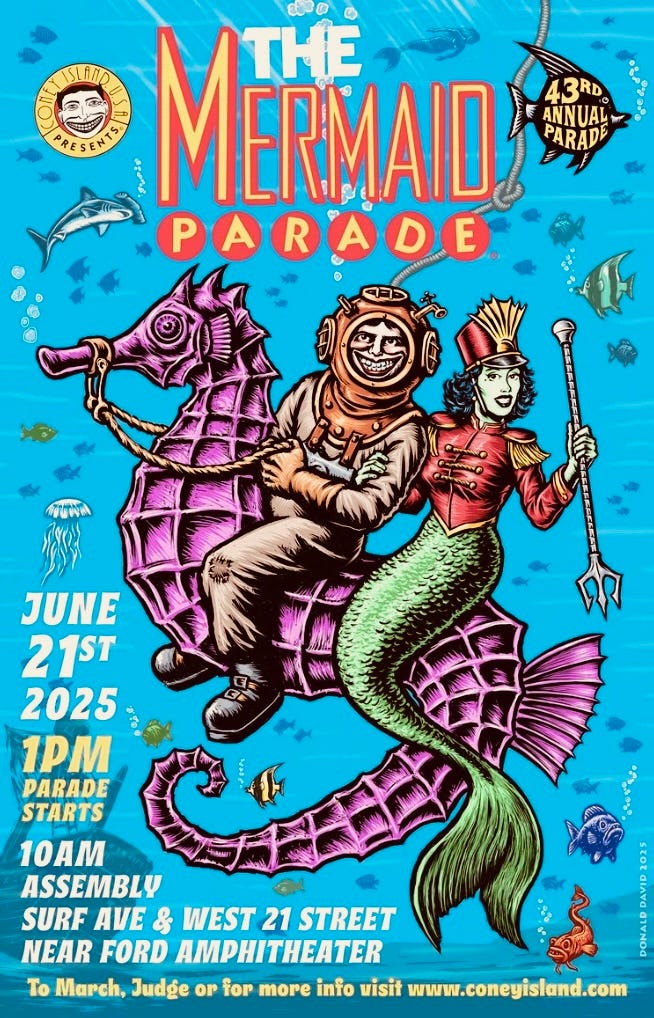
Today, it still has its Mermaid Parade, its Circus Sideshow, and The Cyclone roller coaster at Luna Park, not to mention a rotating roster of redevelopment projects aimed at modernizing the amusement district with new housing developments and municipal services. But in the late nineteenth and early twentieth centuries, it was something stranger and more ambitious—a testing ground for cultural innovations in what John Kasson terms “amusing the million.”
I’ve always loved Kasson’s book—it’s a gem.
It places Coney Island alongside two other public visions of mass uplift: New York’s Central Park and Chicago’s Columbian Exposition. In Central Park, nature promised refinement. In the White City, monumental architecture expressed the highest civic aspirations. Both invited industrial crowds to become civic-minded publics through exposure to beauty and restraint. But, as Kasson suggests—and as anyone who has ever sat politely on a park bench knows—respectability can be, well, dull.
Amusement parks, tourist zones, malls, cruise ships—all the middle-brow spaces of collective entertainment inspire ambivalence. It’s all too easy to critique them, or to adopt an ironic and cynical posture towards commercial kitsch for its mediocre cultural offerings and economies of cheap thrills. Yet, taking mass entertainment as urban development seriously can open us to learning from popular cultures as projects of experimentation with new configurations in civic life.
Turn-of-the-century American social order was undergoing urban and industrial transformations. As the city absorbed more than a million immigrants, the pursuit of pleasure became a profound exercise in contact. These spaces suspended the distinctions of neighborhood, language, and kinship, creating a conviviality that slipped in from the margins of public life. Amusement became a way for a new industrial society to experiment with togetherness.
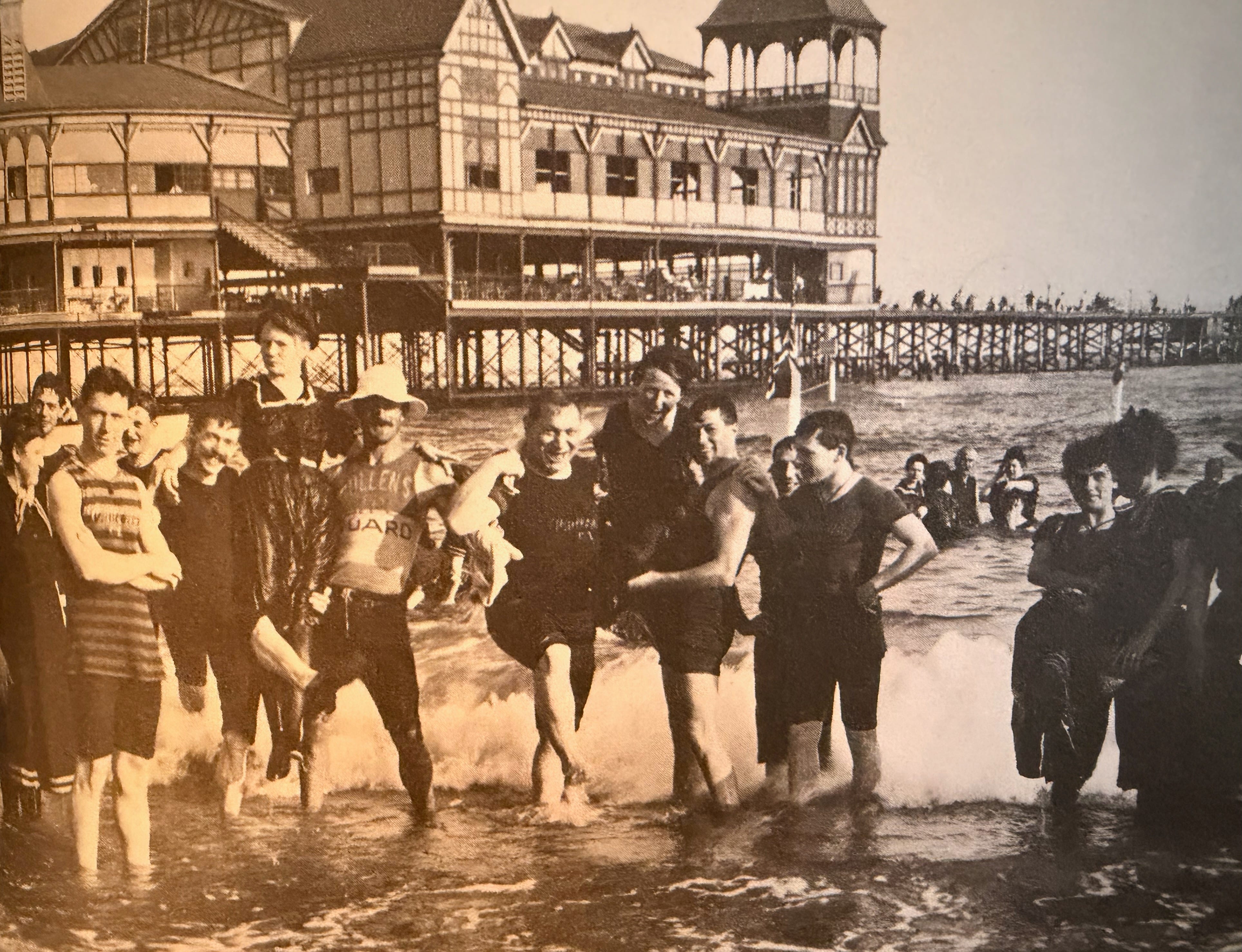
As Victorian customs frayed and countercultural experiments bubbled, seekers of pleasure (licit and illicit) mingled. Swells of people arrived by trolley car, subway, hackney, ferry, elevated train, or bicycle. They promenaded down the boardwalk and gathered on the beach. In hotels and saloons, at circuses and vaudeville houses, at dance halls and in theaters, they experienced people they arrived with, as well as crowds of strangers. There is so much delight in the potentiality of mixture and mingling, in experiencing ourselves as part of eclectic collectivities.
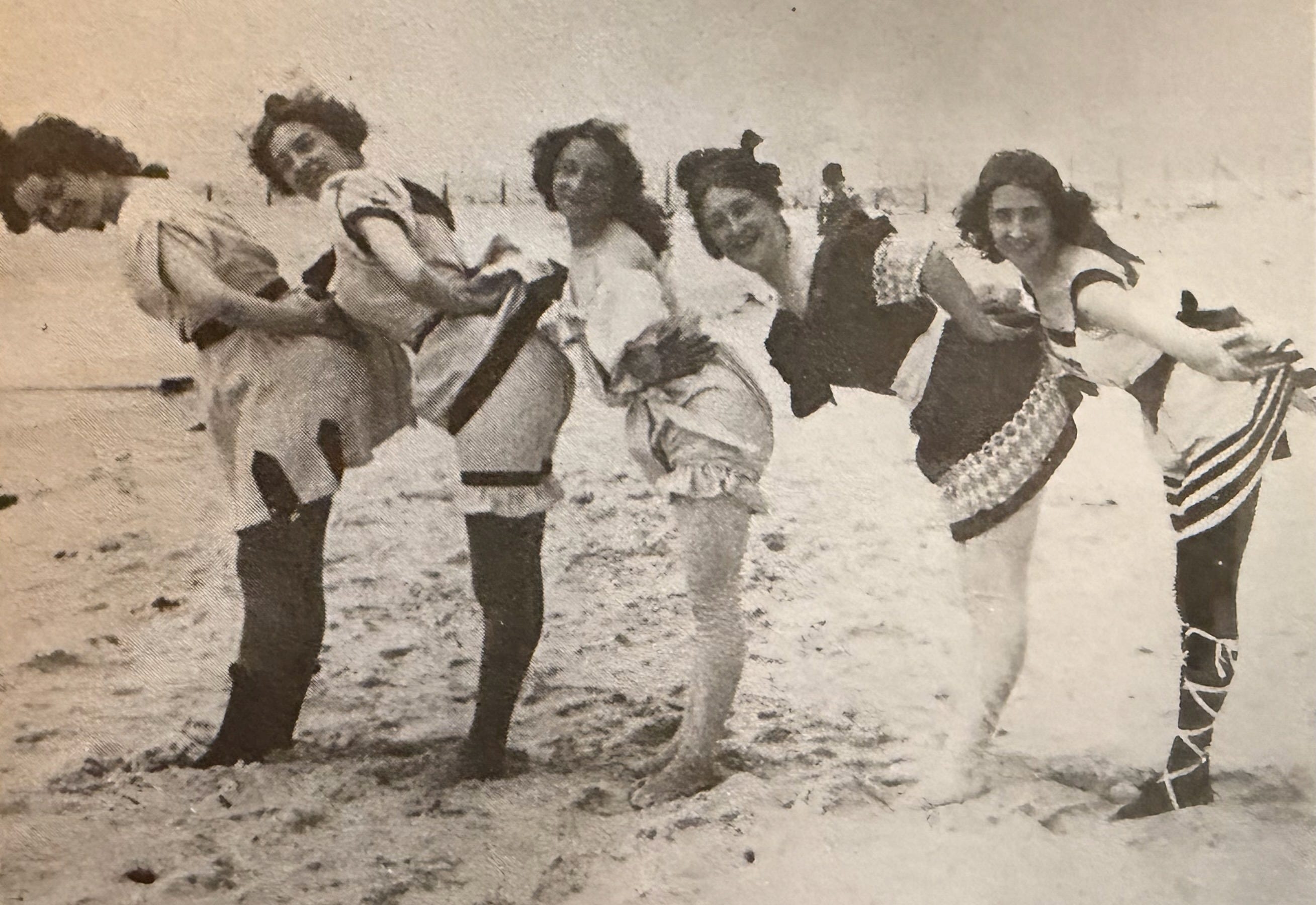
Postcards captured this shift. People mailed images of bathers cavorting in the surf, flirting on promenades, stealing kisses, showing a daring amount of leg. These postcards subtly contested the moral uplift of the parks and the expos. They offered another model of solidarity: play as mutualism, leisure as collective force, the carnivalesque as democratic rehearsal.
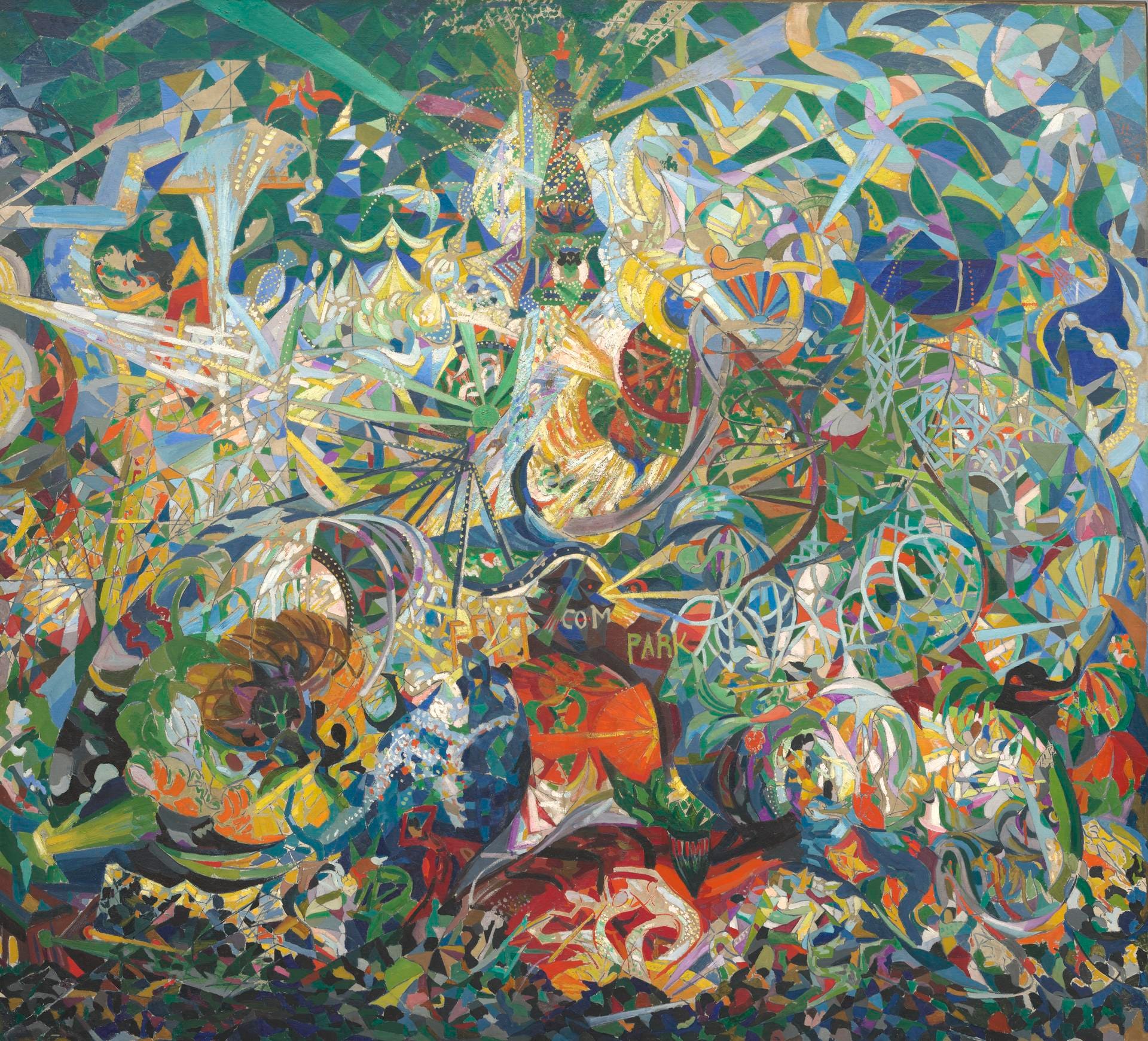
Of course, zones of experimentation always skate along the edge of excess. Like late-twentieth-century Las Vegas or contemporary Burning Man, Coney Island pushed into zones of salaciousness and questionable activity. It is no surprise that figures like the showman and impresario P.T. Barnum drew crowds to attractions, such as the Feejee Mermaid, a hoax, obviously. Placed in broad view, the freak shows, buskers, and colossal amusement complexes composed fantastical façades for fabricated dreamworlds illuminated by strings of electric light. Even at night, crowds wandered between spectacles, marveling at a democratic splendor: the machine as entertainment, the crowd as art.
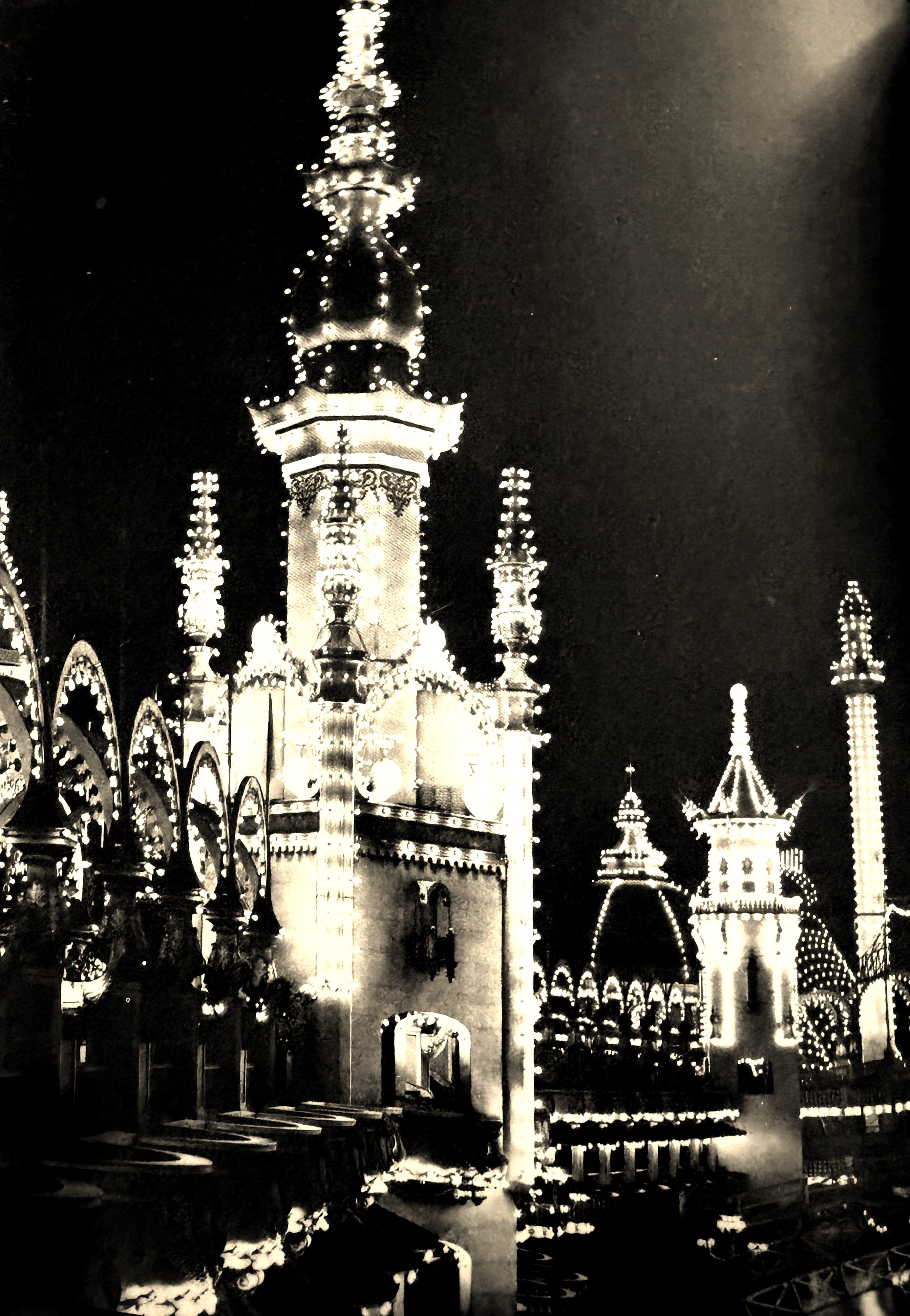
There was, of course, no shortage of cultural critics and American reformers fretting that the age of abundance would lead to moral depravity. James Gibbons Huneker, Jane Addams, and Bruce Bliven were at no shortage for words about the threat of debauchery disintegrating social mores, fraying kinship ties, and corroding community life. The very popularity of Coney Island seemed evidence that American culture was in danger of debasement and decline. Then, as now, there are public intellectuals who will caution that we are in danger of replacing civic virtue with artificial distraction. But these concerns, too, are part of American cultural innovation: each new collectivity generates its own anxieties.
Ultimately, what dimmed Coney Island’s radiance was not scandal or moral collapse but accessibility and ubiquity. The trip became too easy. The spectacle became familiar. As cinema and electric amusements and mass transit systems proliferated, the island’s singularity dissolved.
In Kasson’s closing words: “A harbinger of the new mass culture, Coney Island lost its distinctiveness by the very triumph of its values.” (112).
Nevertheless, give my love to the mermaids.